Plenty of companies have already run an AI proof of concept. Far fewer have one running in production. The gap is rarely the model. A demo built in two weeks can look excellent, because it was built on twenty tidy examples by the person who chose them. The trouble starts when it meets real inputs, real systems and a finance team asking what it costs per transaction.
This is a guide to scoping an AI POC so that it answers the question that actually matters: should we build this for real? It is written for founders, CTOs and operations leaders who are about to fund one, and it is opinionated. The short version is that a POC should be designed to fail fast on the risks that kill AI projects later, not to produce the best possible demo.
Why most AI pilots stall
The numbers on this are not encouraging, though they deserve some care. In July 2024, Gartner predicted that at least 30% of generative AI projects would be abandoned after proof of concept by the end of 2025, due to "poor data quality, inadequate risk controls, escalating costs or unclear business value." That was a forecast, not a measured outcome, but the four reasons it names are a useful checklist.
A year later, Gartner made a similar call about agents, predicting that over 40% of agentic AI projects will be canceled by the end of 2027. Its analyst Anushree Verma described most current agentic projects as "early stage experiments or proof of concepts that are mostly driven by hype and are often misapplied."
The most quoted figure comes from MIT NANDA's July 2025 report, The GenAI Divide: State of AI in Business 2025. According to Campus Technology's summary, the report found that 60% of organisations evaluated enterprise-grade AI systems, only 20% reached the pilot stage and just 5% reached production. Its sample was modest (153 survey responses, 52 interviews and a review of more than 300 public initiatives), so read it as a strong signal rather than a precise rate. Its explanation is the interesting part: the authors blame a "learning gap", systems that "do not retain feedback, adapt to context, or improve over time", and poor fit with day-to-day workflows. Not model quality.
Put those together and a pattern appears. AI projects rarely die because the model cannot do the task at all. They die because nobody checked, early enough, whether it could do the task reliably, affordably and inside the way people actually work.
Demo, POC, pilot, MVP: be clear which one you are buying
A lot of wasted budget comes from paying for one thing while expecting another. These terms get used loosely, so define them in the statement of work.
| Stage | Question it answers | Typical data | Who uses it | Ends with |
|---|---|---|---|---|
| Demo | Can a model do this at all? | A handful of chosen examples | The builder, in a meeting | Interest, or not |
| Proof of concept | Can it do this reliably on our data, at an acceptable cost and risk? | Hundreds of real, messy examples | The team, plus reviewers grading output | A go, iterate or kill decision |
| Pilot | Do real users get value from it inside their workflow? | Live data, limited scope | A small group of real users | Adoption and outcome metrics |
| MVP / production | Can we support this for everyone who needs it? | All live data | The full user group | An owned, monitored product |
Our view: a good POC borrows a little from the pilot stage. It should put output in front of a few real users, even in shadow mode, because user trust is one of the things that most often breaks later. A POC that never leaves a notebook has tested the easy part.
Step 1: Pick a use case that can be proven in weeks
The best first POC is not the most strategic idea on the whiteboard. It is the one where success is easy to measure and the path to production is short. We use a simple scorecard. Score each candidate and drop anything with more than one red.
| Criterion | Green | Red |
|---|---|---|
| Volume | The task happens hundreds or thousands of times a month | A few times a quarter |
| Ground truth | Past examples with known correct answers exist | Nobody agrees what a good answer looks like |
| Owner | A named person runs the process and wants it changed | Sponsored by an innovation team with no process owner |
| Cost of an error | Mistakes are caught by a human or are cheap to reverse | Mistakes are silent, regulated or customer-facing with no review |
| Data access | Inputs are reachable through an API or export this month | Data sits in a system nobody can query without a six-month project |
| Baseline | You know today's time, cost or error rate | No current measurement exists |
Document triage, first-draft responses for a support or operations team, data extraction from semi-structured forms and internal search over policy documents tend to score well. "An AI assistant for the whole company" does not, because nobody owns it and nobody can say when it is good enough.
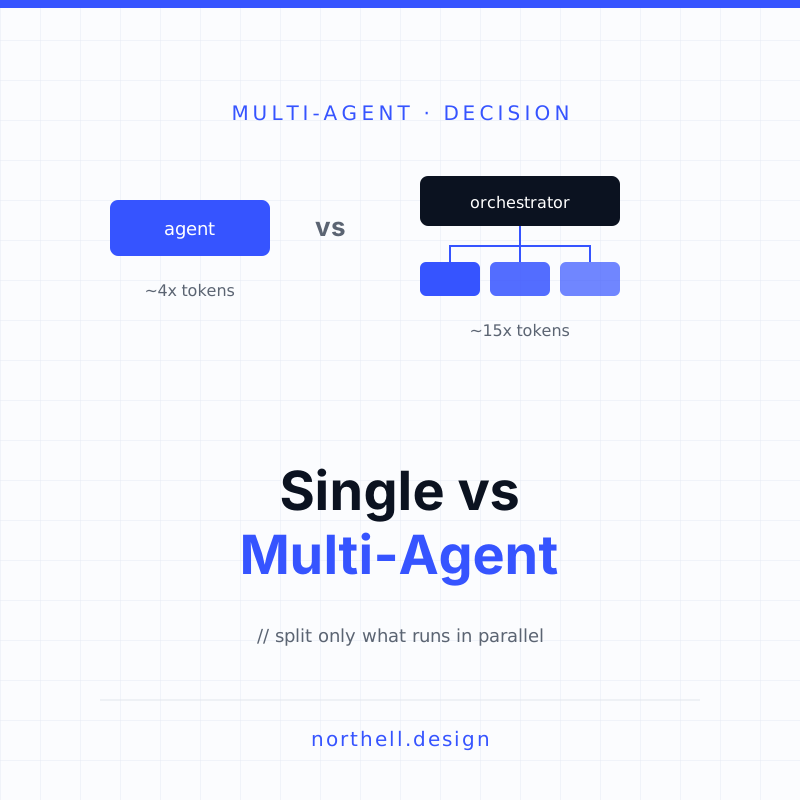
One more filter: do you need an agent? Gartner's release makes the point bluntly: "Many use cases positioned as agentic today don't require agentic implementations." If the steps are known in advance, a fixed workflow with one or two model calls is cheaper to build, easier to test and easier to explain to auditors. We cover that trade-off in more detail in single agent vs multi-agent systems.
Working on something like this? See our Claude Agent Development →
Step 2: Write the pass and kill criteria before any code
This is the step most teams skip, and it is the one that turns a POC from a showcase into an experiment. Before anyone writes a prompt, agree in writing what result would justify moving forward and what result would stop the project.
Anthropic's guidance on defining success criteria for LLM applications is a good template even if you use another provider. It asks for criteria that are specific, measurable, achievable and relevant, and its worked example is the right level of precision: not "classify sentiment well" but an F1 score of at least 0.85 on a held-out test set. It also points out that most use cases need several criteria at once, typically task accuracy, consistency, latency, price and privacy.
For a business POC, we recommend criteria in four groups:
- Quality: the accuracy or acceptance rate needed on the evaluation set, plus a separate ceiling for serious errors. "92% of extractions correct, and zero cases where a wrong policy number is filled in confidently" is far more useful than one average.
- Economics: a maximum cost per completed task, including model calls, retrieval and human review time, compared with today's cost.
- Speed: a latency ceiling that fits the workflow. A back-office batch job and a live chat have very different limits.
- Adoption: what share of AI output the real users accept or lightly edit during the shadow period.
Then write the kill criteria as the mirror image. For example: if accuracy on the held-out set is below 80% after two prompt and retrieval iterations, or if cost per task is above the current manual cost, we stop. Having this in writing protects everyone, including the vendor, from the slow drift where a mediocre result gets one more month, then another.
Step 3: Build the evaluation set from real data first
Collect the test data before you build the system. Pull a few hundred real past cases, with the inputs as they actually arrive (scanned, misspelt, half-complete) and the answer a competent person gave. Deliberately include the awkward ones: the edge cases your team already complains about.
Anthropic's guidance favours volume, recommending more test questions with automated grading over fewer hand-graded ones, and it ranks code-based grading as the fastest and most reliable option where the task allows it. In practice, an exact-match or field-level check on structured output can run in minutes on every change. Reserve human grading for the subjective parts, and use a model as a grader only after you have checked it agrees with your human reviewers.
Split the set. Use one part to develop prompts and retrieval, and keep a held-out part you only score against at checkpoints. Otherwise the team will tune, without meaning to, towards the very examples it reports on.
This evaluation set is the most valuable thing a POC produces. If the project goes ahead, it becomes the regression suite that tells you whether a new model version or prompt change made things better or worse. If the project is killed, it is still the evidence for why.
Step 4: Build a thin slice that is shaped like production
The prototype should be small but real. That means it reads from the actual system of record, through the same authentication and permissions production will need, and writes its output somewhere users already work: a ticket, a CRM field, a review queue. It does not need a polished UI, scaling or every edge case. It does need the same data path.
The reason is the MIT finding about workflow fit. Integration problems, permission models and messy source data are where pilots quietly die, and none of them show up in a notebook. A production-shaped slice surfaces them in week three, when they are cheap to discuss, rather than in month six.
Instrument it from the start. Log every input, output, model version, prompt version, token count and latency. You will need this to calculate economics in Step 6, and you will need it to answer the question "why did it do that?" when a reviewer finds a strange result.
Step 5: Put it in front of real users, safely
Run the slice in shadow mode or with a human approving every output. Users see the AI's suggestion next to their normal work and either accept, edit or reject it. Record which. This tells you more than any offline score, because it measures whether the output is useful to the person who has to stand behind it.
Design matters here more than teams expect. How a suggestion is presented, whether sources are shown, how easy it is to correct, and what happens when the model is unsure all change acceptance rates. We have written separately about designing UX for AI features users trust.
The shadow period also starts to address the learning gap the MIT report describes. Every edit and rejection is labelled data. Feed it back into the evaluation set and, where it makes sense, into retrieval or examples in the prompt. A POC that shows the system getting better with feedback is far more convincing than one with a single static score.
Step 6: Measure the economics honestly
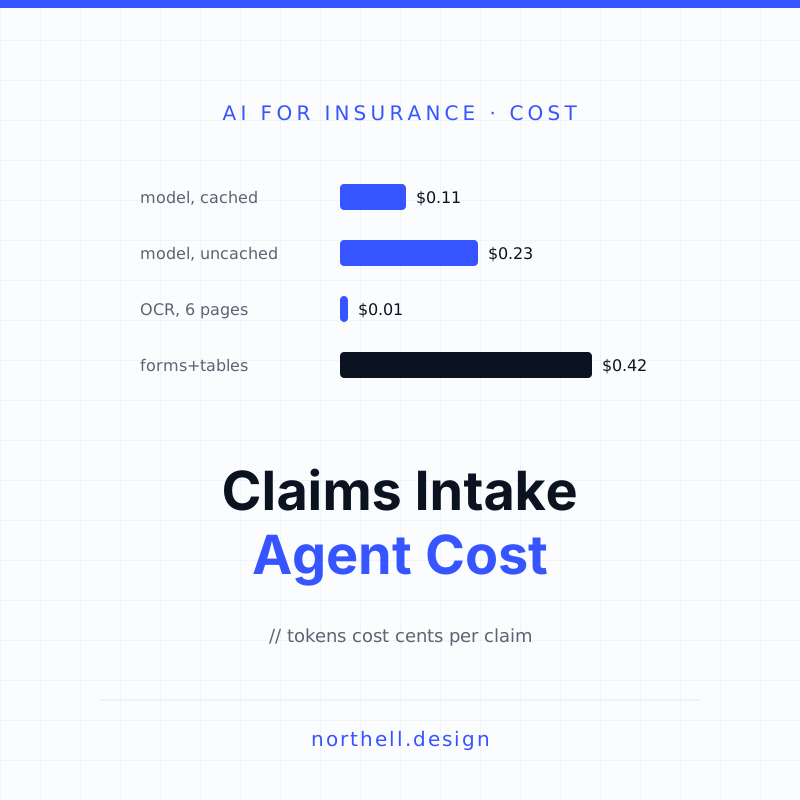
Cost surprises are one of the four reasons in Gartner's forecast, and they are easy to avoid if you measure them during the POC rather than after it. Calculate cost per completed task, not cost per API call. Include retries, retrieval, the human review time you still need, and the share of cases that fall back to fully manual handling.
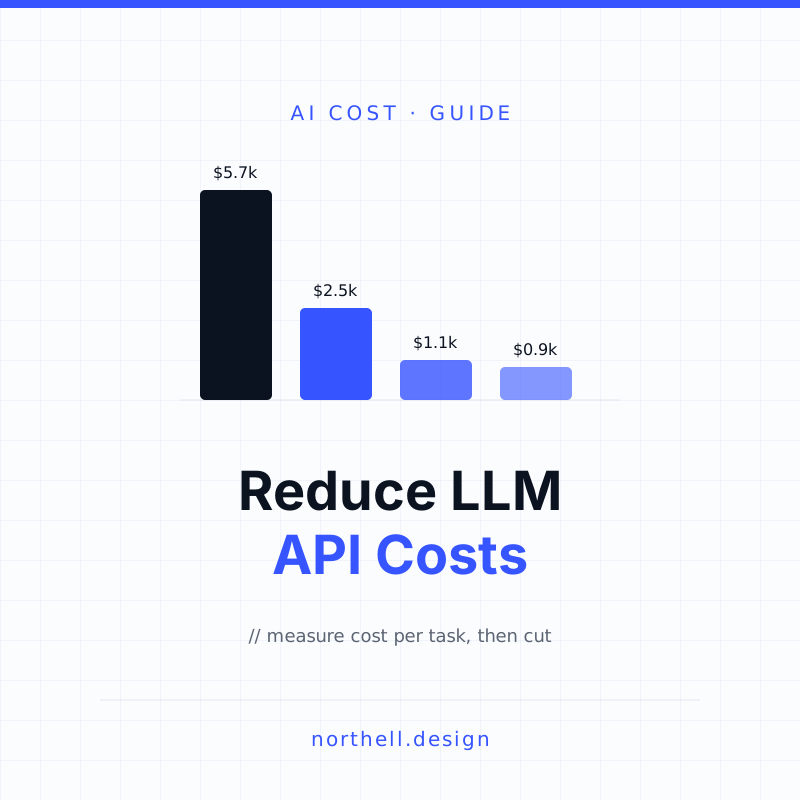
Compare that with the baseline you recorded in Step 1. Then project it to production volume, with a margin for longer inputs and growth. If the numbers only work with the most expensive model and no human review, that is a finding, not a detail. There are usually ways to bring the cost down through routing, caching and prompt design, which we cover in how to reduce LLM API costs, but do the maths before you promise anyone a saving.
Step 7: Run a real go, iterate or kill review
Put the decision meeting in the calendar on day one, and bring the criteria from Step 2. There are three honest outcomes.
| Result | What it looks like | Next step |
|---|---|---|
| Go | Quality, cost and adoption criteria met on the held-out set and in shadow mode | Fund a production build with the eval set, logging and owner already in place |
| Iterate | Close on most criteria, with failures clustered in one identifiable input type or step | Narrow the scope or fix the specific failure, one more time-boxed round, same criteria |
| Kill or park | Errors spread across all inputs, cost above the ceiling, or users not accepting output | Stop, document why, keep the eval set to retest when models or data change |
Kill is a successful outcome for a POC. You spent a few weeks to avoid spending a year. The failure mode to avoid is the fourth, unofficial option: the POC that nobody stops, which ends up used by a handful of people with no owner, no monitoring and no budget.
A six-week plan you can adapt
Timelines vary with data access and the number of systems involved, but for one well-chosen task this shape works well.
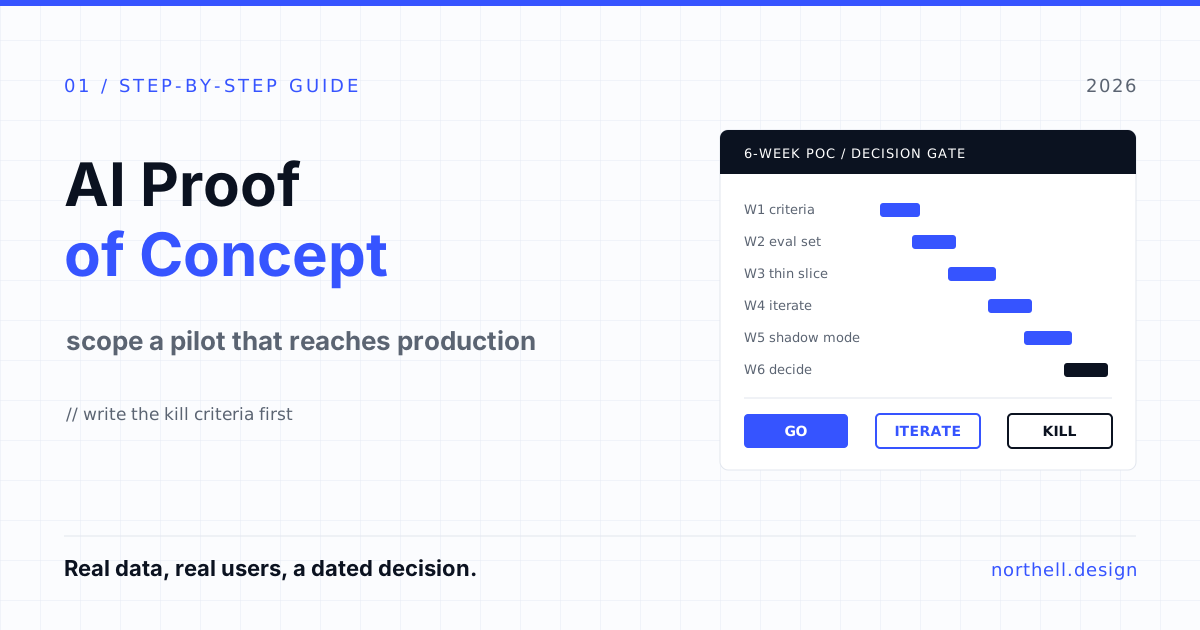
- Week 1: Score candidate use cases, pick one, name the business owner, record the baseline, write pass and kill criteria.
- Week 2: Collect and label the evaluation set, split out the held-out portion, confirm data access and security review.
- Week 3: Build the thin slice end to end with logging; first scored run against the development set.
- Week 4: Iterate on prompts, retrieval and workflow design; first held-out checkpoint.
- Week 5: Shadow mode with real users; capture accept, edit and reject data; measure cost per task.
- Week 6: Final held-out score, economics at projected volume, risk notes, then the go, iterate or kill meeting.
Coverage of the MIT report notes that mid-market companies moved from pilot to full implementation in about 90 days, against nine months or more for large enterprises. Speed on its own is not the goal, but a short, fixed time box forces the decisions that long programmes put off.
Four traps to avoid
- Judging the POC by the demo. A great live walkthrough on chosen examples says little. Ask to see the held-out score and the failure cases.
- Starting with the hardest version. Full autonomy, many tools and no human review is the riskiest way to begin. Prove the narrow, assisted version first and widen it with evidence.
- Treating security and compliance as phase two. If customer or regulated data is involved, the data flow and vendor terms belong in week one. Discovering a blocker in week six wastes the whole POC.
- Letting the vendor define success. Whoever builds the POC should not be the only one deciding whether it passed. The business owner holds the criteria.
How Northell can help
We run AI proof of concept projects built around the steps above: a scored use case, written criteria, a real evaluation set and a production-shaped slice, ending in a clear recommendation rather than just a demo. If you have an AI idea and want an honest view on whether it is worth proving, or a stalled pilot you want a second opinion on, get in touch.