What "Claude vs. Codex" Actually Means in 2026
The comparison gets confusing because it collapses two different questions into one. The first is: which model writes a better single function, given a clear, narrow spec. The second is: which model can run a genuinely agentic task — read a codebase, plan a multi-step change, execute it, and check its own work — without losing the thread halfway through.
Most public benchmarks answer the first question. Most real engineering pain lives in the second. That mismatch is why teams often pick a model based on a leaderboard, then find it underperforms on the actual work they hand it day to day.
Agentic Task Handling: Multi-Step Work Without Losing the Thread
Claude Code is built around sustained tool use across a session — reading files, running commands, checking output, and deciding the next step, often dozens of times, before returning control. That architecture tends to hold up better on refactors, migrations, and debugging sessions that span many files and many steps.
Codex-based tools are strong at fast, well-scoped completions, but agentic sessions that stretch across a large task can drift further from the original intent, especially as the number of sequential steps grows. This isn't a fixed law — it shifts with every model release — but it's the pattern engineering teams report most consistently as of 2026.
Key takeaway: if your workload is mostly "complete this function," the gap narrows. If it's "make this multi-file change and verify it works," the gap tends to widen in Claude's favor.
Codebase Context: How Much Can Each Model Actually Hold and Use
Raw context window size is a marketing number; what matters is how well a model uses that window without losing track of earlier constraints. Claude's larger effective working context tends to help on tasks that require holding project-wide conventions in mind — naming patterns, architectural decisions, a style guide — across a long session.
For teams building or hiring around this specifically, this is the exact gap our Claude Code developers are brought in to close: structuring a codebase and its documentation so the model actually has the right context available, not just a large window it could theoretically use.
Working on something like this? See our Claude Agent Development →
Cost and Speed for High-Volume, Low-Complexity Calls
For narrow, high-volume tasks — single-function completions, boilerplate generation, simple test writing — Codex-based tools are often faster and cheaper per call. If your workload is dominated by this category, that cost advantage is real and worth taking seriously.
The comparison changes once you measure cost against the full task, not the API call. An agentic session that replaces several hours of manual multi-file work has to be judged against that alternative, not against a cheaper single-completion call that wouldn't have finished the task on its own.
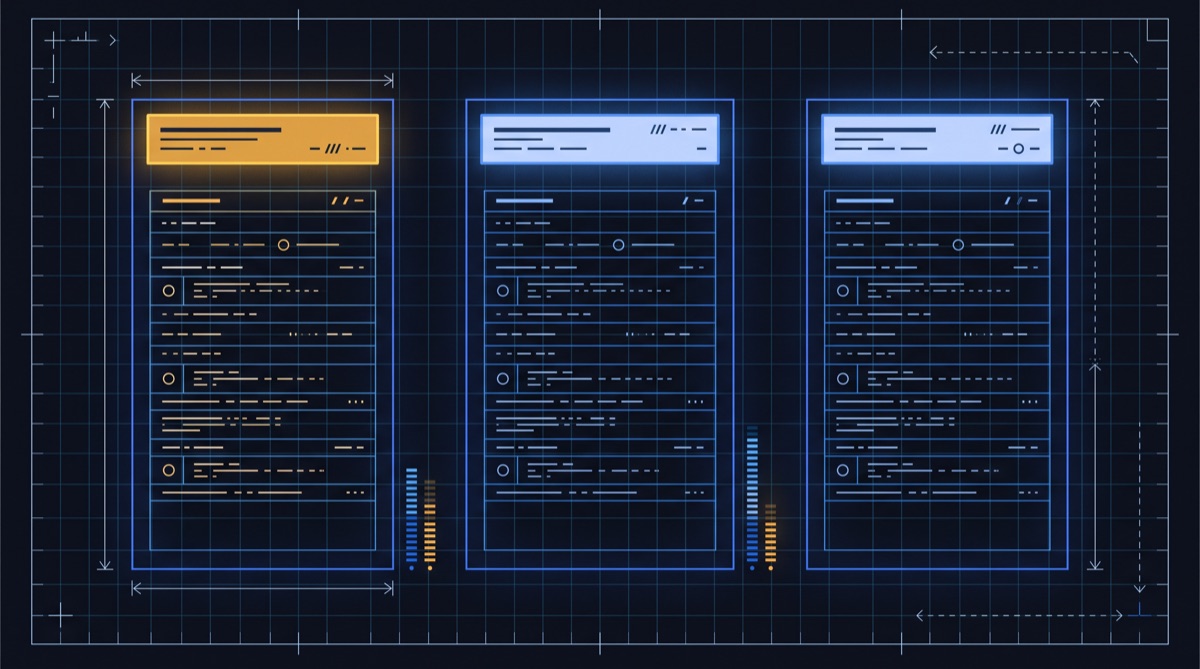
Claude vs. Codex by Use Case
| Use Case | Tends to Favor | Why |
|---|---|---|
| Single-function completion, narrow spec | Codex-based tools | Fast, cheap, well-suited to bounded tasks |
| Multi-file refactor or migration | Claude Code | Sustained tool use, holds cross-file context |
| Large, unfamiliar legacy codebase navigation | Claude Code | Stronger at reading before acting across many files |
| High-volume, low-complexity boilerplate | Codex-based tools | Lower per-call cost at high volume |
| Long agentic debugging sessions | Claude Code | Better at multi-step plan-execute-verify loops |
How to Decide: A Framework, Not a Leaderboard
Start by profiling your own workload, not a public benchmark: what share of engineering time goes to narrow completions versus multi-step, cross-file work? Teams with mostly the former often do fine standardizing on a Codex-based tool. Teams with meaningful agentic workload — real refactors, real migrations, real debugging — tend to get more value from Claude Code, especially once a Claude agent engineer is involved in setting up the surrounding tooling correctly.
If you're weighing this decision against a broader build-vs-buy question — say, whether to use an AI coding assistant at all versus an AI app builder for a specific product — see our Claude vs. Lovable comparison for that adjacent decision. And if cost is the deciding factor either way, our guide to reducing Claude API costs covers the settings that matter regardless of which model wins your evaluation. For a deeper, enterprise-specific breakdown, our Claude vs. GPT enterprise comparison covers the adjacent model-selection question many of the same teams are asking.